Childhood in the 1970s
The Twin Sisters
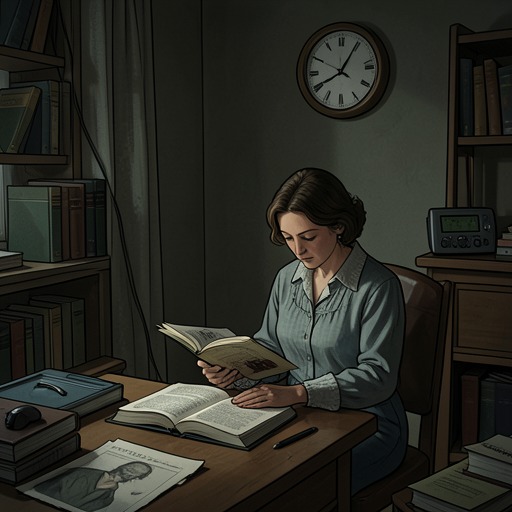
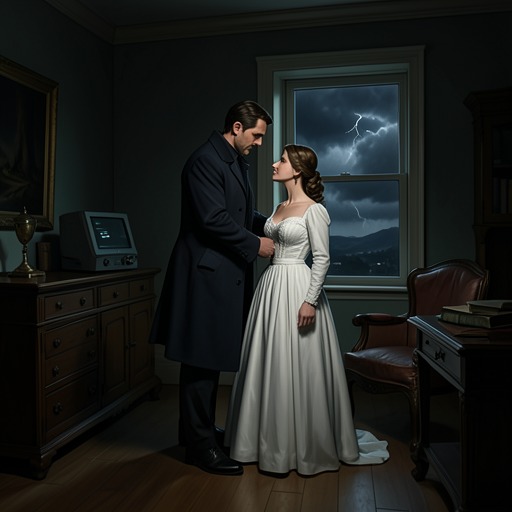
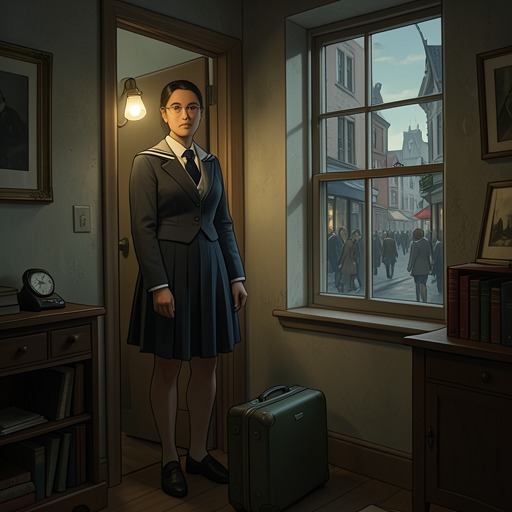
[Bénédicte Ombredanne](entity:character-recall-character-b-n-dicte-ombredann-fdc9d20fcfdf) and her twin sister [Marie-Claire Ombredanne](entity:character-recall-character-marie-claire-ombred-2775fb7f95a0) grew up on their parents’ farm at [Condé-sur-Marne](entity:location-recall-location-87d00ada9cf0). The sisters shared a close, exuberant childhood, though they were opposites in temperament: Bénédicte was more inward, anxious, and devoted to others, while [Marie-Claire](entity:character-recall-character-marie-claire-c19e991d14c8) was more physical and self-assertive.
Their parents offered a model of affection and mutual care, but the contrast between that household and [Jean-François](entity:character-recall-character-jean-fran-ois-c4512278c204)’s restrained family would later shape the sisters’ understanding of his character. The bond between the twins became a central source of belonging for Bénédicte throughout her life.
Childhood and adolescence
The Farmyard Quartet
On weekends and holidays, the two sisters played with brothers [Damien Ombredanne](entity:character-recall-character-damien-ombredanne-b4d56a8048e5) and [Jean-François](entity:character-recall-character-jean-fran-ois-c4512278c204), whose parents kept a country house near the farm. Bénédicte and [Marie-Claire](entity:character-recall-character-marie-claire-c19e991d14c8) were adventurous and quick to tease; Jean-François was timid, touchy, and often left feeling like the unwanted extra in the group.
Marie-Claire later remembered that the imbalance between the children never disappeared from Jean-François’s sense of himself. His need for recognition and resentment of being second would become part of the history she used to explain his later possessiveness.
1989
Bénédicte Meets Olivier
During her years in preparatory classes, [Bénédicte Ombredanne](entity:character-recall-character-b-n-dicte-ombredann-fdc9d20fcfdf) fell in love with [Olivier](entity:character-recall-character-olivier-9265dd7c634b), an older student of agronomy. Unlike the cautious, withdrawn woman she would later become, she was then lively, sociable, and hungry for experience; their romance seemed to promise the extraordinary life she believed she could earn through sincerity and effort.
She and Olivier spent weekends and holidays together, and their friends admired them as a radiant couple. Bénédicte’s faith that a life lived wholeheartedly would be answered by reality began to attach itself to this relationship.
Summer 1989
The Move to Tours
After failing to gain admission to [École normale supérieure](entity:organization-recall-organization-cole-normale-sup-8ecbda4f150c), [Bénédicte Ombredanne](entity:character-recall-character-b-n-dicte-ombredann-fdc9d20fcfdf) chose not to repeat the year. When [Olivier](entity:character-recall-character-olivier-9265dd7c634b) found work in [Tours](entity:location-recall-location-235c1c3b83e0), she left home to join him, continuing her studies while preparing to pursue the French agrégation.
The decision was both romantic and practical: she was building an adult life around the man she believed to be her great love, even as her academic ambitions remained intense. Her confidence in their shared future made the risks seem like part of a meaningful adventure.
Spring 1990
The First Marriage
[Bénédicte Ombredanne](entity:character-recall-character-b-n-dicte-ombredann-fdc9d20fcfdf) and [Olivier](entity:character-recall-character-olivier-9265dd7c634b) married while she was completing her master’s degree. They shared their finances, and Bénédicte’s parents regularly supplied money that helped sustain their life together.
The marriage looked like a continuation of their youthful romance, but its balance was already uneven. Olivier spent heavily on nights out and increasingly left Bénédicte alone, while she struggled to reconcile her ideal of partnership with the growing evidence that she was carrying more than her share.
July 1992
The Agrégation
After a year of strenuous work, [Bénédicte Ombredanne](entity:character-recall-character-b-n-dicte-ombredann-fdc9d20fcfdf) passed the agrégation with an excellent ranking. The achievement confirmed her intellectual gifts and the discipline that had long been part of her identity.
At nearly the same moment, the future she had imagined with [Olivier](entity:character-recall-character-olivier-9265dd7c634b) began to collapse. Her success could not protect her from the private betrayal gathering around their marriage, exposing the limits of her faith that merit and devotion would secure happiness.
1992
Olivier’s Hidden Ambition
[Marie-Claire Ombredanne](entity:character-recall-character-marie-claire-ombred-2775fb7f95a0) later recalled discovering [Olivier](entity:character-recall-character-olivier-9265dd7c634b) in the family study examining the farm’s accounts. He had apparently hoped to take over the agricultural operation through his marriage to Bénédicte, though the family had long expected their cousin to inherit it.
Olivier’s apparent love had been entangled with an ambition he had never openly discussed with his wife. The discovery made the marriage’s collapse look less like a sudden misfortune than the exposure of a deception that Bénédicte had not been equipped to see.
August–December 1992
The Marriage Breaks
When Bénédicte’s father announced that the farm would pass to their cousin, [Olivier](entity:character-recall-character-olivier-9265dd7c634b) left her soon after she received her agrégation. He filed for divorce, and their marriage ended that December. Bénédicte had already suspected his infidelity, but the separation confirmed the depth of the betrayal.
For her, the divorce was more than the loss of a husband: it destroyed the belief that sincerity and high expectations would be rewarded by life. The event became the first great rupture in the idealism that had once made her feel vividly alive.
Late 1992–1993
A Retreat into Depression
After the divorce, [Bénédicte Ombredanne](entity:character-recall-character-b-n-dicte-ombredann-fdc9d20fcfdf) returned to her parents’ home and shut herself in her room for months. Her spontaneity and appetite for life receded, leaving a depression from which her family never felt she fully recovered.
She described the experience as surrender: the happiness she had believed she deserved had not chosen her, and she would stop expecting it. The loss of that belief made her vulnerable to accepting a relationship that offered security and attachment even when it did not offer the love she had once imagined.
April 1993
The First Kiss with Jean-François
[Marie-Claire Ombredanne](entity:character-recall-character-marie-claire-ombred-2775fb7f95a0) unexpectedly saw [Bénédicte Ombredanne](entity:character-recall-character-b-n-dicte-ombredann-fdc9d20fcfdf) and [Jean-François](entity:character-recall-character-jean-fran-ois-c4512278c204) kissing on a sofa at the family home. The sight shocked her: she had never understood Bénédicte to have any romantic interest in him, and she believed the two were unsuited to one another.
[Marie-Claire](entity:character-recall-character-marie-claire-c19e991d14c8) did not press her sister for an explanation. Jean-François, however, had long desired Bénédicte, and her grief after [Olivier](entity:character-recall-character-olivier-9265dd7c634b)’s departure left her unusually exposed to his attention.
1992–1993
Jean-François’s Wish
After [Olivier](entity:character-recall-character-olivier-9265dd7c634b) abandoned Bénédicte, [Jean-François](entity:character-recall-character-jean-fran-ois-c4512278c204) called the family from Italy and announced that his wish had come true: he had thrown coins into the Trevi Fountain and wished for the couple to separate. His joy unsettled [Marie-Claire](entity:character-recall-character-marie-claire-c19e991d14c8), who began to suspect that his attention to her sister had been waiting for this opening.
The confession gave an unsettling shape to the courtship that followed. Jean-François’s attachment seemed less like a newly formed mutual love than an opportunity he had anticipated while Bénédicte was at her weakest.
Autumn 1993
Bénédicte Marries Jean-François
[Bénédicte Ombredanne](entity:character-recall-character-b-n-dicte-ombredann-fdc9d20fcfdf) married [Jean-François](entity:character-recall-character-jean-fran-ois-c4512278c204) after a brief courtship. On their wedding day, she explained their union to [Marie-Claire](entity:character-recall-character-marie-claire-c19e991d14c8) in a single sentence: he had proposed something, and she had followed him.
Bénédicte’s fear of being alone helped make the decision possible. She later built a story of love around a marriage that may have begun as a refuge from solitude, and that retrospective belief kept her bound to a relationship she would struggle to escape.
The years after 1993
A Household of Control
Over the years, [Jean-François](entity:character-recall-character-jean-fran-ois-c4512278c204) organized domestic life around rules, budgets, and routines. He recorded household expenses in his computer, expected receipts even for small purchases, and discouraged spontaneity; Bénédicte increasingly carried the work of managing the home and caring for the family.
She presented their marriage to others as successful, partly from pride and partly because she still hoped it might become what she had imagined. Her account reveals how emotional neglect, surveillance, and self-sacrifice became ordinary long before she could name them as abuse.
During the first decade of the marriage
The Children’s Arrival
Bénédicte and [Jean-François](entity:character-recall-character-jean-fran-ois-c4512278c204) became parents to [Lola](entity:character-recall-character-lola-2f3bbe3e3fd0) and [Arthur](entity:character-recall-character-arthur-2e33b65bbe57). Bénédicte devoted herself to their education and daily care, setting demanding standards, while Jean-François often occupied the more indulgent role and allowed her to appear strict by comparison.
The arrangement deepened Bénédicte’s exhaustion and made it harder for her to distinguish care from obligation. The children later became part of the emotional conflict surrounding her attempts to reclaim a life of her own.
March 2006
The Radio Confession
One evening, [Jean-François](entity:character-recall-character-jean-fran-ois-c4512278c204) listened to a [France Inter](entity:organization-recall-organization-france-inter-3f313515e2e2) program about harassment and abusive partners. He recognized aspects of his conduct in the accounts of both victims and perpetrators, and admitted to Bénédicte that he had behaved toward her like a harasser.
Rather than bring lasting change, the admission briefly gave Bénédicte an outside confirmation that her suffering was real. She understood that her pain was not an invention or a defect in her own judgment, and the recognition helped release anger that had been restrained for years.
March 2006
Joining Meetic
After the confrontation, [Bénédicte Ombredanne](entity:character-recall-character-b-n-dicte-ombredann-fdc9d20fcfdf) went to her office and created a profile on [Meetic](entity:organization-recall-organization-meetic-53f4e54340cb). She chose the name Fionarose, set her search outside [Metz](entity:location-recall-location-metz-ec9b4f793834), and tried to complete the form without turning her private life into a public sales pitch.
Her decision grew from anger, but it was also a deliberate experiment in agency. For the first time, she was making a hidden choice for herself rather than waiting for her husband’s permission or the family’s needs to define what she could do.
Later that night in March 2006
The Online Suitors
As Fionarose, Bénédicte answered several men who quickly pushed the conversation toward sex. She mocked crude advances and kept insisting on conversation, while finding a warmer exchange with [Christian](entity:character-recall-character-christian-6a6d4942e976), a dealer in antiques who lived near [Strasbourg](entity:location-recall-location-835a4f28935f).
Christian’s playful self-deprecation and interest in her words made him seem different from the anonymous crowd. Bénédicte disclosed only a constructed identity, but the exchange allowed a bolder version of herself to emerge and led to a meeting in three days’ time.
March 9, 2006, morning
The Secret Excursion
On the morning of the meeting, Bénédicte dressed carefully and left a note telling her children she had gone shopping. She planned to return quickly and told herself that she could still abandon the encounter at any point.
A call from [Jean-François](entity:character-recall-character-jean-fran-ois-c4512278c204), apologizing for insulting her earlier and asking her to lunch, sharpened her awareness of the life she was stepping outside. She refused him with a plausible excuse and drove toward [Strasbourg](entity:location-recall-location-835a4f28935f), privately allowing the possibility that the day might become more than a walk or an archery lesson.
March 9, 2006, around 12:45 p.m.
A Meeting at the Old House
Bénédicte reached [Christian](entity:character-recall-character-christian-6a6d4942e976)’s old house by the forest and was met by the man she found far more appealing than his photograph had suggested. His warmth and lack of appraising scrutiny immediately contrasted with the attention she was used to receiving at home.
Inside, she explored a crowded, antique-filled salon while Christian made coffee. The house’s dark objects and secluded setting seemed to her a place designed for inwardness, conversation, and love, and her desire became difficult to keep separate from the day’s innocent pretexts.
March 9, 2006, early afternoon
The Longbow Lesson
[Christian](entity:character-recall-character-christian-6a6d4942e976) introduced Bénédicte to his longbow and explained his idea of instinctive shooting: the archer should become continuous with the bow, the target, and the present moment. Bénédicte listened closely, finding poetry in the shot even as he explained the weapon’s force and its hunting uses.
The lesson gave their attraction a language of intention and risk. The arrow became an image of a thought released into the world, a connection that would soon shape Bénédicte’s understanding of the day as something larger than chance.
March 9, 2006, afternoon
The Bullseye
After several imperfect attempts, Bénédicte faced a choice she could not resolve: whether to stay with [Christian](entity:character-recall-character-christian-6a6d4942e976) or leave. She promised herself that she would go if the next arrow missed the red, and remain if it struck the target.
The arrow landed in the bull’s-eye, though not where she had consciously aimed. Christian called the shot proof that their meeting was guided by necessity, and Bénédicte accepted the interpretation long enough to let him kiss her.
March 9, 2006, afternoon
A Kiss Beneath the Oak
[Christian](entity:character-recall-character-christian-6a6d4942e976) and Bénédicte walked into the forest, where they kissed beneath his favorite oak. Their intimacy felt immediate, but when Christian reached beneath her dress she pulled away, frightened by the leap from desire to action.
Christian reassured her that nothing had to happen beyond what she wanted. His patience gave her room to speak, and the contrast between his gentleness and her husband’s control made the encounter a test of whether she could direct her own body and choices.
March 9, 2006, afternoon
The Marriage Revealed
Bénédicte told [Christian](entity:character-recall-character-christian-6a6d4942e976) that she was married and explained that she had come to prove she could still act freely. When he asked whether [Jean-François](entity:character-recall-character-jean-fran-ois-c4512278c204) struck her, she first minimized the answer, then admitted that he sometimes shoved her and that she had fallen and been hurt.
Christian challenged the distinction she made between being struck and being struck without intention. Their conversation allowed Bénédicte, for once, to look at her situation with another person beside her rather than alone, even as she insisted that she was not ready to leave her husband.
March 9, 2006, late afternoon
The Day’s Declaration
Bénédicte and [Christian](entity:character-recall-character-christian-6a6d4942e976) returned to the house and made love. She experienced a tenderness and physical pleasure she had not known in her marriage, and the room’s old objects, including its severe ecclesiastical portrait and clock, became part of the memory she would preserve.
She called the afternoon the apotheosis of her youth and said that it was the last happy day of her life. The prophecy made the happiness feel both radiant and already doomed, a brief liberation whose memory would later sustain and torment her.
March 9, 2006, around 6:10 p.m.
The Insurrectionary Return
Though she knew she was late, Bénédicte stayed with [Christian](entity:character-recall-character-christian-6a6d4942e976) and spoke of how her household treated her as an invisible provider of care. She explained that her husband monitored her movements and controlled her access to a mobile phone, while she anticipated days of anger and questioning when she returned.
She nevertheless insisted that the day had been worth its consequences and refused to regret it. At [6:10 p.m.](entity:time-recall-time-18-10-e537760d3361), the time fixed in the clock, she left the house and drove toward [Metz](entity:location-recall-location-metz-ec9b4f793834) with the memory of her freedom still vivid.
March 9, 2006, evening
The Return to the Family Home
Bénédicte arrived home after telling [Jean-François](entity:character-recall-character-jean-fran-ois-c4512278c204) that she had been delayed in the [Vosges](entity:location-recall-location-d427928e6fac) by car trouble. Her children had been left to manage without her, and the household had spent the evening waiting; Jean-François was furious and demanded the truth.
[Lola](entity:character-recall-character-lola-2f3bbe3e3fd0) sensed that her mother’s explanation was false, while [Arthur](entity:character-recall-character-arthur-2e33b65bbe57) and Lola were frightened by their father’s rage. Bénédicte tried to reassure them and preserve the ordinary routines of motherhood even as the confrontation closing in around her threatened to consume the night.
March 9, 2006, night
The Interrogation Begins
Once the children were in bed, [Jean-François](entity:character-recall-character-jean-fran-ois-c4512278c204) accused Bénédicte of having an affair and demanded to know where she had been. He used her clothes, her boots, and her inherited eye ring as evidence, then turned the conversation into a prolonged and humiliating investigation.
Bénédicte denied having a lover, but the denial did not end the questioning. His insistence that she prove her innocence converted her private excursion into a prison of suspicion that would dominate the months ahead.
March 2006, the day after the meeting
The Love Letter
[Christian](entity:character-recall-character-christian-6a6d4942e976) wrote to Bénédicte with an ardent account of their day and asked to see her again. He imagined a life that might include her children and offered himself as a lasting lover, convinced that their affinity already amounted to certainty.
Bénédicte reread the message until she knew much of it by heart, then deleted it to protect herself from her husband’s searches. Her reply thanked Christian but ended the relationship, framing their afternoon as a closed circle that must remain perfect because it would never be repeated.
March 2006
The Closed Circle
[Christian](entity:character-recall-character-christian-6a6d4942e976) refused to accept Bénédicte’s final-sounding message and asked her to leave open a possibility of contact. She answered only, “Please,” and he stopped pressing for the moment.
The exchange deepened rather than resolved her grief. Bénédicte believed that preserving the memory required renouncing the relationship, even as the loss became another source of pain that she concealed from everyone around her.
March–July 2006
Four Months of Accusations
[Jean-François](entity:character-recall-character-jean-fran-ois-c4512278c204) questioned Bénédicte repeatedly, waking her at night and pursuing her through the house with accusations and demands for details. He called her explanations lies, mocked her vocabulary and appearance, and used the absent lover as a reason to keep her under constant pressure.
The ordeal exhausted her and strained her relationships with [Amélie](entity:character-recall-character-am-lie-786b20e9d957) and [Lola](entity:character-recall-character-lola-2f3bbe3e3fd0). Bénédicte’s attempts to preserve a normal home life coexisted with a growing sense that the marriage had become an inescapable system of surveillance and humiliation.
Spring 2006
The Roundabout Vision
On her drive to school, Bénédicte began to see an abstract steel sculpture on a roundabout as a monstrous forecast of what she was becoming. The vision took hold after a sleepless night and made her feel trapped inside an ugly, inhuman version of herself.
As she fled the image, another car struck her vehicle. The crash was not severe, but it jolted something loose in her mind and preceded the moment when she would finally stop denying the truth of the affair to [Jean-François](entity:character-recall-character-jean-fran-ois-c4512278c204).
Night of May 6–7, 2006
The Confession
After [Jean-François](entity:character-recall-character-jean-fran-ois-c4512278c204) woke her again, Bénédicte finally broke. She admitted that she had gone to meet a man she found online, that she had made love with him, and that she loved him; she described the encounter with a force that turned the confession into an attack against the life that had confined her.
[Lola](entity:character-recall-character-lola-2f3bbe3e3fd0) and [Arthur](entity:character-recall-character-arthur-2e33b65bbe57) heard the explicit words and came to the bedroom, where they saw their mother raging and their father in tears. By morning, Bénédicte had returned to the routines of breakfast, school, and work rather than leaving the house, surrendering a rare chance to establish new terms for her life.
Four days after the confession
The Threat and the Pact
After several days of silence, [Jean-François](entity:character-recall-character-jean-fran-ois-c4512278c204) said he could not live with what he had learned and threatened to kill Bénédicte, the children, and himself if she changed her account. He demanded that she keep to the full version she had revealed during the night of confession.
Bénédicte agreed, partly from fear and partly from a desire to restore the household. The agreement fixed her to a story that Jean-François would repeatedly force her to retell, giving his jealousy a new instrument of control.
Spring–summer 2006
Sex as Punishment
[Jean-François](entity:character-recall-character-jean-fran-ois-c4512278c204) alternated periods of despair with renewed questioning. He demanded graphic descriptions of Bénédicte’s encounter with [Christian](entity:character-recall-character-christian-6a6d4942e976) and sometimes made her repeat them while he touched or forced her, presenting the coercion as necessary to overcome his anguish.
Bénédicte tried to interpret the episodes as a painful process of reconciliation, but they were degrading and left her crying in silence. The marriage’s earlier abuse had now acquired an intimate ritual built around her confession and his claim to a right to every detail.
July 2006, before hospitalization
The Twelve Pink Tablets
After another night of being made to relive the affair, Bénédicte saw the roundabout sculpture’s image of herself in the bathroom mirror. She took twelve [Xanax tablets](entity:object-recall-object-xanax-82c70dac33ed) from two blister packs, swallowed them with water, and concealed the torn packaging before returning to bed.
The overdose was a desperate response to exhaustion and despair, though she did not later explain it as a clear intention to die. It removed her from the house and brought her to the first period of protected quiet she had experienced in years.
July 2006
Emergency Admission
[Bénédicte Ombredanne](entity:character-recall-character-b-n-dicte-ombredann-fdc9d20fcfdf) woke after seventy-two hours at the psychiatric emergency service of the [Centre hospitalier régional de Metz](entity:organization-recall-organization-centre-hospitali-a9b46c2f00c7). Staff told her that the dose had not been fatal, but she did not want to return home and could not bring herself to explain why.
A psychiatrist arranged a transfer to [Clinique Sainte-Blandine](entity:organization-recall-organization-clinique-sainte-601f5baee297) for a short stay. Her refusal to discuss her family life left the clinicians with concerns but also allowed her to enter a quieter setting where she could sleep and begin to recover.
July 6–21, 2006
The Refuge at Sainte-Blandine
At [Clinique Sainte-Blandine](entity:organization-recall-organization-clinique-sainte-601f5baee297), Bénédicte slept, rested, and kept her husband at a distance. [Jean-François](entity:character-recall-character-jean-fran-ois-c4512278c204) visited daily and complained that she was staying too long, while she experienced her private room as a rare shelter from his questioning and the demands of home.
She avoided giving the psychiatrist a full account of the marriage because she feared that doing so would end her refuge prematurely. Her silence was not simple evasion: inside the clinic, she felt the first faint return of desire, privacy, and the possibility of becoming someone beyond wife and mother.
During her first week at Sainte-Blandine
The Forty Pages
Bénédicte asked for paper and a pencil, then began writing through the nights by the light of a small lamp inherited from her grandmother. She recorded her afternoon with [Christian](entity:character-recall-character-christian-6a6d4942e976) in sensory detail, including the house, the conversations, and the changes in her body.
Writing restored a sense of inward movement that had been nearly extinguished. The pages became a private mirror in which she could recognize herself as distinct, imaginative, and worth caring for, rather than as a role performed for others.
July 2006
Meeting Élisa
During her tentative walks outside her room, Bénédicte met [Élisa](entity:character-recall-character-lisa-80032666581a), a vivid, outspoken resident who invited her to [La Bulle](entity:location-recall-location-la-bulle-4cb5571d317a), the café attached to the clinic. There she encountered other patients and a social world suspended between hospital life and ordinary public life.
The café’s modest rituals, including its enormous whipped-cream waffles, offered a childlike ease that Bénédicte had rarely allowed herself. In that sheltered group, she began telling the story she had hidden from colleagues, friends, and family.
During Bénédicte’s July 2006 stay
Aurélie’s Stalker
At [La Bulle](entity:location-recall-location-la-bulle-4cb5571d317a), [Aurélie](entity:character-recall-character-aur-lie-5f599e04165a) described how a man she had briefly dated had become obsessed with her. For two years he had appeared around her home and car, leaving messages and marks, while legal action and a previous prison sentence failed to stop him.
Aurélie explained that her efforts to end the initial relationship gently had been treated by the man as evidence of love. Her account offered Bénédicte a stark parallel to the way coercive men could transform a woman’s ordinary kindness into a supposed promise of intimacy.
During Aurélie’s account in July 2006
The Stalker’s Past
[Aurélie](entity:character-recall-character-aur-lie-5f599e04165a) revealed that the man had previously pursued another woman in [Toulouse](entity:location-recall-location-ddb428d21325) for years, serving prison terms and spending time in psychiatric care. He had moved to [Metz](entity:location-recall-location-metz-ec9b4f793834) and told Aurélie that destiny would eventually make her love him and have his children.
The disclosure showed that his behavior was not a misunderstanding or a short-lived romantic delusion, but a pattern of deliberate persistence. The residents responded with alarm and solidarity, and Bénédicte felt a powerful wish to protect Aurélie.
Late July 2006
A Brief Extension
Bénédicte hoped to remain at [Clinique Sainte-Blandine](entity:organization-recall-organization-clinique-sainte-601f5baee297) long enough to make a decisive plan, perhaps to leave her husband, move, and begin a different career. The psychiatrist allowed a few extra days but ultimately told her she had to go home.
She had imagined the clinic as a place where a new future could be built carefully, not in a fortnight. Returning to the same household before she had gained the strength to act left her feeling as though the trapdoor over her brief hope had slammed shut.
Late July 2006
The Return to the Cave
At home, Bénédicte found her husband distant and again subject to alternating accusations and demands for reassurance. Her children seemed wary of her after the hospitalization, and she struggled to recover the sense of light and possibility she had found at the clinic.
She later described the household as a cave from which she could not escape. The contrast between the refuge of [Sainte-Blandine](entity:location-recall-location-sainte-blandine-e737b5f6823b) and the return to her marriage marked a setback, though the writing and friendships she had discovered there remained part of her inner life.
December 2006
The First Cancer
[Bénédicte Ombredanne](entity:character-recall-character-b-n-dicte-ombredann-fdc9d20fcfdf) was diagnosed with advanced breast cancer. She underwent chemotherapy, breast-conserving surgery, and weeks of daily radiotherapy, yet concealed the severity of her illness from most colleagues and continued teaching whenever she could.
The illness compounded an already punishing domestic life. Her determination to appear capable made it difficult for others to recognize how much she was suffering, and [Jean-François](entity:character-recall-character-jean-fran-ois-c4512278c204) continued to treat her physical distress as something she exaggerated or should overcome.
Around January 2008, after twenty-two months apart
Bénédicte Returns to Christian
After recovering from the first cancer treatment, Bénédicte went without warning to [Christian](entity:character-recall-character-christian-6a6d4942e976)’s house. She called from outside the garden, then asked him to come out and walk with her rather than greet her with a kiss, wanting to prolong the suspended moment of reunion.
They retraced their earlier path through the forest, recalling the bench, the archery lesson, and the language of their first afternoon. Bénédicte’s shaved hair and the fact that she had preserved her boots made the meeting both a return to the past and an encounter with the altered life she had since endured.
Around January 2008, the day of the reunion
The Walk Through the Forest
During their walk, [Christian](entity:character-recall-character-christian-6a6d4942e976) showed Bénédicte the trees and explained the difference between ivy and mistletoe, while she answered his practical observations with a more enchanted way of seeing. Their conversation returned to the intimate rhythm they had shared on their first day together.
The walk let Bénédicte inhabit the memory without immediately turning it into a promise of a shared future. At last, she said that the time had come for them to kiss, closing the novel on a renewed but still uncertain intimacy.
October 2007
Reading Éric’s Novel
[Bénédicte Ombredanne](entity:character-recall-character-b-n-dicte-ombredann-fdc9d20fcfdf) read the novel by [Éric Reinhardt](entity:character-recall-character-ric-reinhardt-015ff9b5503b) that her bookseller had recommended. Its divided characters and imagined lives spoke to her sense that a person could be fragmented yet still become whole, and that life itself might be reinvented.
The book helped her lift her head after the collapse of hope following her hospital stay. She began to believe again that she might resist her circumstances and become happy, making literature a private source of rescue and a catalyst for renewed self-invention.
After reading the novel, before March 2008
The First Letter
Bénédicte wrote [Éric Reinhardt](entity:character-recall-character-ric-reinhardt-015ff9b5503b) a letter after her application to join a literary prize jury was rejected. She was angry that she would not be able to argue for his book, but her indignation carried humor, intelligence, and a courage she had not shown in her daily life.
[Éric](entity:character-recall-character-ric-4c8db65d6fb8) read the letter on his apartment landing and felt an immediate wish to meet its writer. He answered with thanks, beginning a correspondence in which Bénédicte’s literary response gradually disclosed the urgency of her inner life.
March 2008
The First Nemours Meeting
Bénédicte met [Éric Reinhardt](entity:character-recall-character-ric-reinhardt-015ff9b5503b) at [Le Nemours](entity:location-recall-location-le-nemours-e5a63a0a20f1), where they discussed his writing and the literary references they shared. She spoke of her longing for a hidden trapdoor in ordinary reality, a chance to escape the dullness of her life and recover a sense of wonder.
[Éric](entity:character-recall-character-ric-4c8db65d6fb8) initially overlooked her among the café’s customers, then recognized her by her attentive gaze. Her apparent ordinariness concealed an intensity that he had already sensed in her letters, and their encounter established a trust that would deepen later in the year.
March 2008, near the end of their first meeting
The Writer’s Confession
When Bénédicte asked whether [Éric Reinhardt](entity:character-recall-character-ric-reinhardt-015ff9b5503b) had begun a new novel, he described the exhaustion that followed the completion and success of his previous book. He confessed that he had cried alone in his office and feared that he had spent everything he had as a writer.
His candor helped make their exchange reciprocal rather than a one-sided encounter between author and admirer. Bénédicte answered with reassurance, and [Éric](entity:character-recall-character-ric-4c8db65d6fb8) later understood that his own vulnerability had helped make it possible for her to speak openly.
September 2008
The Second Nemours Meeting
Bénédicte returned to [Paris](entity:location-recall-location-paris-c02b439ce220) and met [Éric Reinhardt](entity:character-recall-character-ric-reinhardt-015ff9b5503b) again at [Le Nemours](entity:location-recall-location-le-nemours-e5a63a0a20f1). This time she spoke for hours, describing her life with [Jean-François](entity:character-recall-character-jean-fran-ois-c4512278c204), the March 2006 encounter with [Christian](entity:character-recall-character-christian-6a6d4942e976), the overdose, and the refuge she had found at [Sainte-Blandine](entity:location-recall-location-sainte-blandine-e737b5f6823b).
[Éric](entity:character-recall-character-ric-4c8db65d6fb8) listened and encouraged her, feeling the distance between the elegant café setting and the violence she recounted. The conversation transformed their connection into an ongoing confidences-based friendship, though he remained outside the household where the abuse continued.
September 2008, during the second meeting
The Ring and the Confession
Bénédicte showed [Éric](entity:character-recall-character-ric-4c8db65d6fb8) the inherited ring bearing a painted eye, a keepsake associated with a woman who loved a man already committed elsewhere. The object linked her own secret desire to a past she could not fully know.
As the afternoon ended, she said she did not want to go home. Éric reminded her that her children were waiting, and promised that they would keep writing. The ring and its tiny painted gaze became a recurring image of hidden love and the burdens of secrecy.
Autumn 2008–spring 2009
The Correspondence Deepens
After their second meeting, Bénédicte and [Éric](entity:character-recall-character-ric-4c8db65d6fb8) exchanged emails and messages. She sent accounts of her marriage and sometimes attached pages from her private journal; Éric urged her to take steps to protect herself and asked for further details when her stories were incomplete.
Her husband’s surveillance made her communications irregular, and she sometimes disappeared for weeks before returning with an apology. Éric interpreted the silences as signs that she was trying to manage danger, while Bénédicte treated the correspondence as both a source of comfort and a fragile line beyond her home.
March 2009
The Secret Phone
Bénédicte had acquired a second, concealed mobile phone for private communication. [Jean-François](entity:character-recall-character-jean-fran-ois-c4512278c204) discovered it after a message sounded while he was with her, found the device hidden behind Mallarmé’s works, and read tender exchanges between her and another man.
To prevent her husband from identifying that man and beginning another round of interrogations, Bénédicte said the messages were from [Éric Reinhardt](entity:character-recall-character-ric-reinhardt-015ff9b5503b). Jean-François shoved her against a wall as he seized the phone; she told [Éric](entity:character-recall-character-ric-4c8db65d6fb8) afterward that she had to end their contact for a while.
March 2009
The Broken Correspondence
Bénédicte asked [Éric](entity:character-recall-character-ric-4c8db65d6fb8) not to call or message her and said she would contact him when things had settled. Éric agreed that she had done what was necessary, but felt used as a cover for an affair she had never told him about.
He was also uneasy that [Jean-François](entity:character-recall-character-jean-fran-ois-c4512278c204) might turn his anger toward him. When Bénédicte did not follow up, Éric did not pursue her, and their correspondence fell silent, leaving both the friendship and his sense of responsibility unresolved.
April 2010
The Unanswered Birthday
Bénédicte sent [Éric Reinhardt](entity:character-recall-character-ric-reinhardt-015ff9b5503b) a birthday greeting. Still hurt by the abrupt end to their last conversation, he did not answer, and she did not send another message.
The silence became consequential when [Éric](entity:character-recall-character-ric-4c8db65d6fb8) later learned that this was likely her final birthday greeting to him. What seemed at the time like a small withholding became, in retrospect, one of the last chances he had to answer her directly.
February 2010
The Cotentin Walk
[Jean-François](entity:character-recall-character-jean-fran-ois-c4512278c204) insisted that Bénédicte join him and the family on a long walk in [Cotentin](entity:location-recall-location-0d24ab525a5d) despite her fatigue, back pain, and aching limbs. He dismissed her complaints as psychological and treated physical exertion as proof that she was not truly ill.
Bénédicte endured the hike in severe pain, while even [Lola](entity:character-recall-character-lola-2f3bbe3e3fd0) eventually sided with her father’s view that her mother was spoiling the trip. The episode reflected a pattern in which Bénédicte’s bodily knowledge was repeatedly overruled by Jean-François’s certainty.
March 14–24, 2010
The Second Cancer
After a specialist examined a lump in Bénédicte’s abdomen, tests revealed a second primary cancer, already spread to multiple organs. Her twin sister [Marie-Claire Ombredanne](entity:character-recall-character-marie-claire-ombred-2775fb7f95a0) had noticed her pallor and cough months earlier, but Bénédicte had dismissed them and recent tests had found nothing.
The diagnosis left little hope of treatment overcoming the disease. [Marie-Claire](entity:character-recall-character-marie-claire-c19e991d14c8) came to believe that Bénédicte’s body had become the only escape from an intolerable life, though this was her grief-stricken interpretation rather than a certainty the story could prove.
Spring–autumn 2010
The Final Months at Home
As Bénédicte’s illness advanced, [Marie-Claire](entity:character-recall-character-marie-claire-c19e991d14c8) discovered how severely [Jean-François](entity:character-recall-character-jean-fran-ois-c4512278c204) controlled her care. He withheld the prescriptions, managed her medications, delayed turning on the heat, and resisted taking her to hospital when chemotherapy left her vomiting and unable to eat.
Marie-Claire eventually intervened and helped secure an urgent hospital stay. She also took Bénédicte shopping for a short red wig and a cloche hat after Jean-François refused to help her find one, giving her sister a brief pleasure in choosing how she wished to look.
Late 2010–January 2011
The Forced Hospital Vigil
When Bénédicte was admitted to hospital for the final stage of her illness, [Jean-François](entity:character-recall-character-jean-fran-ois-c4512278c204) arranged to sleep beside her despite her explicit request that he leave. He also took medical leave to remain there, presenting his presence as care even as she said it frightened and exhausted her.
He paced at the foot of her bed for hours and tried to make her acknowledge that she was dying. Bénédicte sometimes spoke as though she would recover and return home, and her doctors explained that she had the right not to keep the fact of death constantly before her.
January 2011
The Last Conversations
As Bénédicte grew weaker, she still telephoned [Marie-Claire](entity:character-recall-character-marie-claire-c19e991d14c8) at night to ask whether she would die. Marie-Claire reassured her and promised that they would speak again the next day, though both understood that the promise might not hold.
[Jean-François](entity:character-recall-character-jean-fran-ois-c4512278c204) continued to present himself as the central companion in Bénédicte’s final days, while Marie-Claire believed that her sister felt more comfort with her. Bénédicte’s brief lucid hopes and nightly calls preserved a thread of intimacy amid the approaching loss.
January 23, 2011, at 5:45 a.m.
Bénédicte’s Death
[Bénédicte Ombredanne](entity:character-recall-character-b-n-dicte-ombredann-fdc9d20fcfdf) died in hospital after months of widespread cancer. [Marie-Claire](entity:character-recall-character-marie-claire-c19e991d14c8) arrived later that morning and found her sister’s face peaceful, one eye slightly more open than the other.
The family grieved beside her, but [Jean-François](entity:character-recall-character-jean-fran-ois-c4512278c204) had the body taken to the morgue while they stepped away to telephone their mother. The sudden removal left Marie-Claire facing the closed doors of the lift, devastated that she had lost the chance to remain with her sister’s body.
January 23, 2011, after Bénédicte’s death
The Clearing of the Room
[Jean-François](entity:character-recall-character-jean-fran-ois-c4512278c204) returned to the hospital room with the children and a large rubbish bag. He hurriedly removed Bénédicte’s belongings, toiletries, flowers, and even unopened biscuits, while her family stood too stunned and grief-stricken to stop him.
His actions made the room seem less like the place where a person had lived and died than a space to be emptied and erased. The disposal of her things became one of the most painful scenes in [Marie-Claire](entity:character-recall-character-marie-claire-c19e991d14c8)’s account of the family’s aftermath.
January 24–27, 2011
The Unprepared Body
In the days before the funeral, Bénédicte remained in her nightdress at the morgue, without her jewelry and without having been prepared for visitors. [Jean-François](entity:character-recall-character-jean-fran-ois-c4512278c204) delayed bringing clothes, then arrived with garments [Marie-Claire](entity:character-recall-character-marie-claire-c19e991d14c8) and the family felt were alien to Bénédicte’s taste and identity.
He did not bring the elegant dress, boots, velvet jacket, and wig her relatives had recommended. The sight of Bénédicte dressed in an ill-fitting, outdated outfit made Marie-Claire feel that her sister’s appearance had been deliberately degraded even after death.
February 2011
The Family’s Second Loss
Three days after the funeral, [Lola](entity:character-recall-character-lola-2f3bbe3e3fd0) called her grandmother and blamed her for Bénédicte’s death, saying that the family visits had exhausted her mother. The call was devastating, and the grandmother was hospitalized that evening.
She died three weeks later, extending the family’s grief beyond Bénédicte’s death. The accusation also showed how the children had absorbed the conflicts and explanations circulating around their mother’s illness.
April 2011
Éric Learns of the Death
When [Éric Reinhardt](entity:character-recall-character-ric-reinhardt-015ff9b5503b) tried to email Bénédicte, the message bounced back. He called both her mobile numbers and found them disconnected, then searched her name online and encountered her death notice.
He felt his silence after their last conversation as a grave failure. The news made him wonder whether answering her birthday message might have changed anything, though he had no way to know; her death transformed a forgotten correspondence into an urgent responsibility to remember her.
April 2011, the day after the death notice
The Visit to Reims
Unable to learn how Bénédicte had died, [Éric](entity:character-recall-character-ric-4c8db65d6fb8) traveled to [Reims](entity:location-recall-location-4848a687f203) and booked a facial at the beauty institute run by [Marie-Claire Ombredanne](entity:character-recall-character-marie-claire-ombred-2775fb7f95a0). He only realized during the appointment that she was Bénédicte’s twin sister and asked her about the death.
[Marie-Claire](entity:character-recall-character-marie-claire-c19e991d14c8) told him that Bénédicte had first survived breast cancer and later developed a separate, widespread cancer. She believed the second illness was connected to the suffering Bénédicte had endured at home, and that her husband had destroyed her will to live.
April 2011, during Éric’s visit
Marie-Claire’s Account
Over dinner and later in her car, [Marie-Claire](entity:character-recall-character-marie-claire-c19e991d14c8) told [Éric](entity:character-recall-character-ric-4c8db65d6fb8) about Bénédicte’s childhood, her marriage to [Olivier](entity:character-recall-character-olivier-9265dd7c634b), the depression after their divorce, and the way [Jean-François](entity:character-recall-character-jean-fran-ois-c4512278c204) had become her husband while she was vulnerable. She described how Bénédicte had made herself believe in a marriage that did not begin in the mutual love she had longed for.
She also recounted the control, humiliations, medical neglect, and isolation that marked Bénédicte’s later life. Her testimony widened Éric’s understanding beyond the two meetings and correspondence he had shared with Bénédicte, while remaining the bereaved sister’s perspective rather than an independent verdict on every event.
The final period before Bénédicte’s death
The Unanswered Call to Christian
[Marie-Claire](entity:character-recall-character-marie-claire-c19e991d14c8)’s account made clear that Bénédicte had spent her final years cut off from the life she once imagined with [Christian](entity:character-recall-character-christian-6a6d4942e976). She had spoken of the day with him as the brightest memory of her life, but the novel does not establish that she resumed contact with him after their forest reunion.
The remembered meeting remained both a real encounter and an inner refuge: Bénédicte had returned to Christian once, but the story’s later chronology offers no promise that the renewed kiss became a lasting escape from her marriage or illness.
In the literary tale Bénédicte loved
The Embedded Opera Encounter
In the story by [Félicien de la Vierge](entity:character-recall-character-f-licien-de-la-vier-198275e01adf), a young man sees a beautiful woman at the opera and falls in love at first sight. He follows her into the street and declares his passion, only to learn that she is deaf and has spent years studying the expressions and gestures that allow her to answer people convincingly.
The woman refuses a life built on sensual illusion, even though she recognizes the quality of Félicien’s feelings. Her insistence that an unspoken secret is nearly nothing, and that she will not accept only half of love, echoed Bénédicte’s longing to be truly understood and her fear of an intimacy that could not survive daily life.
The novel’s ending, during Bénédicte and Christian’s reunion
The Last Forest Promise
In their forest walk, Bénédicte and [Christian](entity:character-recall-character-christian-6a6d4942e976) returned to the details of their earlier afternoon: the trees, the hidden path, the old house, and the language of the arrow. Bénédicte teased him about the poems he had promised to write for her, while Christian admitted that he had written them but wanted to keep them private.
As they reached a broad view over the valley, Bénédicte asked Christian to kiss her. The ending offers a moment of renewed tenderness rather than a settled future, leaving the reader with the possibility of happiness suspended against all that the story has already revealed.